Tuscarawas County Real Estate Search gives a clear way to review deed records, ownership history, and title details tied to local parcels. This search pulls from public filings recorded in Tuscarawas County, so results reflect official land activity. Buyers, sellers, and researchers rely on this system to confirm who owned a property and when changes occurred. In the middle of the process, the tuscarawas county real estate search shows transfer dates and legal descriptions. Each record helps verify facts before property decisions move forward.
Tuscarawas County Real Estate Search supports real estate lookup needs through a structured county property database. Users can check property ownership search results by owner name, parcel number, or recorded document. These records outline conveyance filings, deed types, and referenced title data. In the middle of a review, the tuscarawas county real estate search helps trace how ownership passed between parties. Clear public records like these support accurate research for property planning and transactions.
How Real Estate Records Work in Tuscarawas County
Tuscarawas County Real Estate Search include official documents that show who owns land, how ownership changed, and which legal rights apply to a parcel. These records support property transactions, legal review, and title confirmation using public filings. Tuscarawas County Auditor ensures these records are accurately maintained and accessible. Tuscarawas County Real Estate Search come from public land records filed through county offices in Tuscarawas County. They reflect legally recorded actions tied to land and buildings, not market estimates or opinions. Buyers, sellers, attorneys, and lenders rely on these documents to confirm facts shown in property documentation.
What qualifies as a real estate record
A real estate record includes any recorded instrument that affects ownership or legal rights tied to a property. These documents enter the public land records after filing and review.
Common record types include:
- Warranty deeds and quitclaim deeds showing transfers
- Mortgages and releases tied to financing
- Liens and satisfactions affecting title status
- Easements and right-of-way filings tied to land use
- Affidavits and corrections linked to prior filings
Assessment data vs. legal ownership data
Assessment data and legal ownership data serve different roles. Assessment records focus on property value for taxation. They list parcel numbers, land use, and assessed values set by local appraisal standards. Legal ownership data comes from recorded instruments. Deeds and related filings prove who holds title and how that title changed. Assessment files may list an owner name, yet deeds remain the legal source of ownership history. Title reviews depend on deed chains, not assessed values.
Why these records matter
Real estate records matter across many property decisions. Buyers review them to confirm sellers hold valid title. Sellers use them to show clean ownership history before listing. Legal professionals examine them to resolve disputes or prepare filings.
These records support:
- Title searches before closing
- Boundary and easement checks
- Lien reviews tied to financing
- Historical ownership review for legal matters
What Is a Tuscarawas County Deed Search?
A Tuscarawas County Real Estate Search is a method used to review official documents that prove property ownership and transfer history. It shows how legal rights to land were recorded and passed from one party to another. A Tuscarawas County Real Estate Search is based on land deed records filed with county offices in Tuscarawas County. These filings form the legal record of who owns real estate and how that ownership changed. A property deed lookup supports buyers, sellers, lenders, and legal teams who need verified ownership details drawn from public filings.
What a deed means in real estate records
A deed is a legal document that transfers ownership of real property from one party to another. It identifies the grantor, the grantee, and the exact parcel involved. The document includes a legal description, execution date, and recording reference. Once recorded, the deed becomes part of the county’s permanent land deed records. This filing links the transfer to the property’s history and places the ownership change on public record. A recorded deed search allows users to trace these filings across different years and owners.
A deed record usually contains:
- Names of parties involved in the transfer
- Parcel or legal land description
- Recording date and instrument number
- Type of ownership interest conveyed
Legal significance of deeds
Deeds hold legal weight because they serve as primary proof of ownership. Courts, title reviewers, and financial institutions rely on them during disputes, closings, and financing review. The language inside a deed defines what rights were transferred.
Different deed types appear in land deed records, each carrying specific legal effects:
- Warranty deeds confirm the grantor holds clear title
- Quitclaim deeds transfer interest without title guarantees
- Survivorship deeds reflect joint ownership rights
- Trustee deeds relate to trust or estate transfers
How deeds establish ownership and transfer rights
Ownership starts once a deed is signed, delivered, and recorded. Recording places the transfer into public land records and gives legal notice of the change. This step protects the new owner’s claim to the property. A tuscarawas county deed search shows the full chain of title. It connects past owners, transfer dates, and recorded interests tied to the parcel. This record trail supports title review and reduces risk during real estate transactions.
Key details confirmed through a deed search include:
- Current and prior owners
- Valid transfer dates
- Recorded interests affecting title
How to Perform a Tuscarawas County Real Estate Search
A Tuscarawas County Real Estate Search allows users to check deeds, ownership history, and parcel details through official county records. The search process follows a clear sequence using owner names, parcel numbers, or deed references. A Tuscarawas County Real Estate Search uses public property records maintained by Tuscarawas County. These records support property review for sales, legal review, and title checks. The official search tool is available at the naked URL below and works directly from county-maintained data.
Official real estate search page URL: https://auditor.co.tuscarawas.oh.us/Search/Owner
Open the official search page
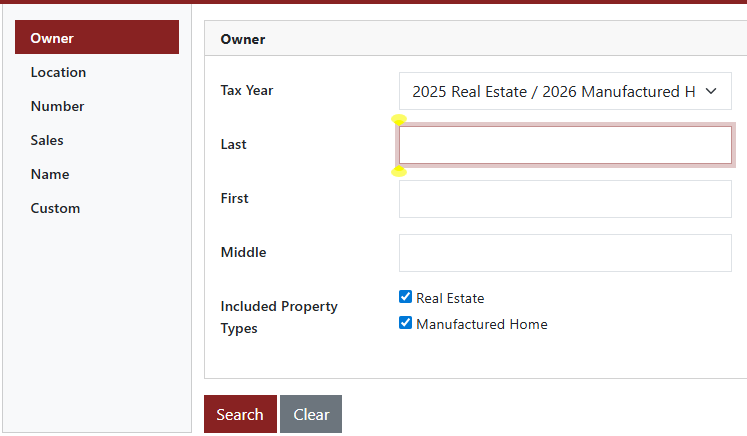
Start by opening the official county property search page using the URL listed above. The page loads a real estate lookup connected to recorded county data. No login is required. The search form appears at the top of the page. This page acts as the starting point for all recorded property searches. It supports name-based and parcel-based review from the same system.
Select a search method
Choose the search option that matches the information already available. Each option pulls results from the same county property database.
Available search methods:
- Owner name search for people or business ownership
- Parcel number lookup for exact property results
- Deed book & page for known recorded references
Enter search details correctly
Type details carefully into the selected fields. For owner name searches, enter the last name first. Use full names when possible. Parcel numbers should match the county format exactly.
Helpful entry tips:
- Avoid initials unless listed on the deed
- Leave punctuation out of names
- Confirm parcel digits before submitting
Run the search and review results
Select the search button to display matching records. Results usually show owner names, parcel numbers, transfer dates, and reference details. Review each record line by line. Confirm that the parcel description and dates match the intended property. Open individual records for deeper detail tied to recorded instruments.
Use deed book and page details
When deed book and page numbers appear, they act as direct record references. Enter these numbers into the deed search fields to pull the original filing.
Deed references help verify:
- Transfer sequence
- Ownership changes over time
- Recorded interests tied to the parcel
Apply filters for focused results
Filters narrow large result sets. Year filters limit records to a chosen time range. Document type filters separate deeds from other filings.
Common filter uses:
- Recent transfers only
- Deeds only
- Historical ownership review
Types of Deeds Recorded in Tuscarawas County
Deed transfers recorded in Tuscarawas County document how property ownership changes from one party to another. Each type of deed carries specific legal rights and protections reflected in official conveyance filings. Deed transfers and conveyance filings in Tuscarawas County provide a public record of property ownership changes. They show who legally owns the property, the rights being transferred, and the level of guarantee provided. Understanding each type of deed helps buyers, sellers, and legal professionals confirm valid title and reduce risk.
Warranty deed
A warranty deed offers the strongest protection for the buyer because it guarantees that the grantor holds clear title and that no prior claims or liens exist against the property. It is most common in standard residential and commercial sales where buyers need assurance of full ownership rights. Lenders often require a warranty deed before approving a mortgage because it protects both the buyer and the lender against undisclosed claims. These deeds are recorded in the county’s conveyance filings and show the complete chain of title. Key points of a warranty deed include:
- Confirms grantor’s legal ownership
- Guarantees freedom from prior liens or claims
- Provides maximum legal protection to the buyer
- Often required for mortgage approvals
Quitclaim deed
A quitclaim deed transfers whatever interest the grantor holds without offering any guarantees about the title. It is often used in situations where trust already exists between parties, such as family transfers, divorce settlements, or internal business transactions. While this deed is simpler and faster to process, it carries more risk because it does not protect against prior claims. Quitclaim deeds are still recorded in county property records to make the transaction official. Key points include:
- Transfers interest without title guarantees
- Common in family or divorce-related transfers
- Faster and simpler than warranty deeds
- Requires careful review before acceptance
Fiduciary deed
A fiduciary deed is used when someone conveys property while acting in a legal capacity, such as an executor, trustee, or guardian. The signer transfers property on behalf of an estate, trust, or other legal entity. Fiduciary deeds ensure the property transfer is valid and protects the interests of beneficiaries. These conveyance filings must include documentation verifying the signer’s legal authority. Key points include:
- Used for estates, trusts, or court-appointed actions
- Requires proof of legal authority
- Recorded to make the transfer official
- Protects beneficiaries and ensures valid ownership transfer
Transfer on death deed
A transfer on death deed names a beneficiary who will receive the property after the owner’s death. The original owner retains full control during their lifetime, making this deed useful for estate planning. Recording it with the county ensures the future transfer is legally recognized and bypasses probate. Key points include:
- Ownership remains with the original owner until death
- Avoids probate and simplifies inheritance
- Recorded for legal notice and protection of beneficiary
- Becomes effective only upon the owner’s death
Ownership History & Chain of Title Explained
Ownership history and title records provide a detailed look at who has legally owned a property over time. They show how ownership changed and help confirm that the current owner has a clear title. Ownership history is a record of all past owners of a property, usually maintained in official county records in Tuscarawas County. These records include historical conveyances such as deeds, transfers, and other recorded instruments. Reviewing this chain of ownership helps buyers, sellers, and legal professionals verify property rights and detect potential title issues before transactions.
What ownership history reveals
Ownership history provides insight into the full chain of title for a property. It lists prior owners, transfer dates, deed types, and any recorded claims or liens. By examining title records, users can confirm the sequence of transfers and verify that the property was legally conveyed at each step. This helps establish confidence that the current owner truly holds valid rights.
Key elements often revealed in ownership history:
- Full chain of ownership from earliest recorded owner to present
- Dates of conveyances and transfers
- Recorded liens, easements, or mortgages
- Changes in legal description or property boundaries
Why chain of title matters for clear ownership
The chain of ownership confirms that each transfer of the property was properly recorded and legally valid. Any break in the chain could raise questions about who actually owns the property or create disputes in future sales. Lenders, title companies, and legal professionals rely on a complete chain of title to guarantee that the property can be safely sold or mortgaged.
A strong chain of title protects buyers and sellers by:
- Confirming past transfers were legitimate
- Ensuring no unresolved liens or claims exist
- Supporting clear legal ownership in current records
Common red flags in title history
While reviewing title records, certain red flags can signal potential issues:
- Missing or incomplete deeds in the chain of ownership
- Unrecorded liens or easements affecting property rights
- Multiple owners listed for overlapping time periods
- Confusing or inconsistent legal descriptions across transfers
Deed Transfers & Conveyance Filings in Tuscarawas County
Deed transfers in Tuscarawas County are recorded through conveyance filings to legally document property ownership changes. These filings create a public record showing who owns the property and how ownership has transferred over time. Whenever real property changes hands, a conveyance filing is required. This includes sales, gifts, transfers due to divorce, or transfers through estates and trusts. Filing ensures the transaction is legally recognized and protects both the buyer and the seller. In Tuscarawas County, all property transfers must be recorded with the county auditor’s office to establish a clear chain of title.
How transfers are recorded
Transfers are documented through official recorded instruments, including deeds, affidavits, and releases. Once executed, the deed is submitted to the county recorder, where it is reviewed, assigned a recording number, and added to the public property records. This process creates a permanent record of ownership history.
Key points of recording transfers:
- Legal description of the property is included
- Names of grantor and grantee are documented
- Type of deed (warranty, quitclaim, fiduciary, etc.) is recorded
- Recording date is officially logged for legal reference
Public accessibility of filings
Once recorded, conveyance filings become part of the public land records. Residents, buyers, real estate professionals, and legal practitioners can review these documents through the official county property database. Public accessibility ensures transparency, supports due diligence in property transactions, and helps verify ownership and past transfers. By maintaining accurate property transfer records and recorded conveyance documents, Tuscarawas County ensures that all parties can confidently confirm ownership and protect their legal rights in real estate transactions.
Title Records vs Property Tax Records
Title records show the legal ownership of a property and all recorded transfers, while property tax records reflect the assessed value of the property for taxation purposes. Both are maintained by county offices, but they serve very different functions.
What Title Records Include
Title records in Tuscarawas County are maintained by the county recorder and consist of deeds, conveyances, and other legal instruments that establish ownership. These records provide a complete chain of title, showing how the property passed from prior owners to the current owner. They also record the type of deed used, transfer dates, and any legal encumbrances. Buyers, sellers, and legal professionals rely on these records to confirm ownership, verify rights, and reduce the risk of disputes during transactions.
Key points of title records include:
- Legal ownership details and chain of title
- Recorded transfers and deed types
- Encumbrances, liens, or easements affecting the property
- Transfer dates and grantor/grantee information
What Property Tax Records Include
Property tax records are maintained by the county auditor and focus on tax assessment data, such as the property’s appraised value, tax rates, and payment history. These records are used for calculating annual property taxes and can be referenced in a tax estimator to help predict future obligations. They do not legally confirm who owns the property. While the auditor may list an owner’s name, this is for taxation purposes only and may not reflect the legal owner shown in title records. Reviewing tax records can help determine tax obligations and track historical payments.
Key points of property tax records:
- Parcel’s assessed value and tax rate
- Tax payment history and delinquencies
- Owner listed for tax purposes
- Property classification and land use data
Who Uses Tuscarawas County Real Estate Records
Tuscarawas County real estate records are used by a variety of people and professionals who need verified property information. These records help home buyers, investors, attorneys, and title companies confirm ownership, review history, and make informed decisions.
Home Buyers
Home buyers rely on county property records to confirm that the seller legally owns the property and that the title is free from liens or disputes. Reviewing deeds and ownership history ensures buyers are protected during a purchase. By checking prior transfers, easements, and any recorded claims, buyers can avoid unexpected issues that could affect the property’s use or value. Access to accurate records gives them confidence and helps plan their investment carefully before finalizing the sale.
Real Estate Attorneys
Real estate attorneys use these records to perform due diligence, draft contracts, and resolve disputes. Detailed ownership history and conveyance filings allow attorneys to verify that each transfer was legally valid. They also rely on these records to investigate prior ownership when title defects or legal claims arise, ensuring clients are protected in complex transactions. Access to complete public records streamlines legal review and helps prevent future conflicts.
Title Companies
Title companies depend on Tuscarawas County records to perform title searches and issue insurance policies. These searches confirm the chain of ownership, identify any liens, and ensure the property can be legally transferred to a buyer. Accurate property documentation reduces risk and protects both buyers and lenders, making title searches an essential step in the real estate process.
Investors and Developers
Investors and developers examine public land records to evaluate property value, ownership, and past conveyances before purchasing or developing real estate. Historical transfers, deed types, and parcel information help assess risk and identify opportunities. Having access to detailed county records ensures better planning, informed investment decisions, and secure property acquisition in Tuscarawas County.
Frequently Asked Questions
Tuscarawas County maintains a comprehensive set of public real estate records that include deeds, ownership history, and conveyance filings. These records are essential for verifying legal ownership, tracing the chain of title, and reviewing historical property transfers. They are used by a wide range of users, from home buyers and investors to real estate attorneys and title companies. Most records are available online through the county property search portal, though older documents may be kept in physical deed books at the recorder’s office. By understanding how to access and interpret these records, users can ensure they have accurate information before making property-related decisions. Public access to these records also promotes transparency and reduces the risk of disputes.
How to find property owner in Tuscarawas County?
Finding a property owner in Tuscarawas County is simple using the official county property search tool. Users can enter the owner’s full name, parcel number, or property address to see the most current recorded owner. The search results show ownership details, parcel information, and sometimes related deed references, which helps verify legal ownership. Accurate entries, especially the correct spelling of names, are important for precise results. This tool benefits home buyers, neighbors, and professionals who need to confirm ownership quickly without contacting the owner directly. Historical transfers are also accessible, allowing users to view prior owners and past conveyances. Using the official portal ensures the information is up-to-date and reliable.
How to check deed records in Tuscarawas County?
To check deed records, users can access the county recorder’s database online, which contains recorded conveyance filings. Searches can be performed by grantor or grantee name, parcel number, or deed book and page reference. Each deed record includes the type of deed, parties involved, legal description, and the date of transfer. This information helps buyers and legal professionals verify that ownership transfers were executed correctly and that the property has a clear title. Reviewing these deeds is also useful for title companies and real estate attorneys who need a complete chain of ownership before closing transactions. By understanding the deed type and details, users can assess potential risks or encumbrances.
Are Tuscarawas County real estate records public?
Yes, real estate records in Tuscarawas County are public, meaning anyone can access deeds, ownership history, and conveyance filings. The official county portal allows users to search records without creating an account, making it convenient for residents, investors, and professionals. Public access ensures transparency in property transactions and allows verification of legal ownership before completing a sale or purchase. Some older records may only be available in physical books at the county recorder’s office, while more recent records are fully digitized. While sensitive documents may have limited restrictions, most conveyance filings and deed records are accessible online for reference and research. This transparency supports informed decision-making and reduces the risk of disputes.
Can I search property by parcel number?
Searching by parcel number provides one of the most precise ways to locate property information in Tuscarawas County. Each parcel has a unique identifier that eliminates confusion when multiple owners share similar names. Entering the parcel number in the search tool returns the current owner, recorded deeds, and historical conveyances associated with that property. This method is especially useful for investors, developers, or legal professionals who need accurate and specific property details. Parcel searches help confirm legal descriptions and reduce errors that may arise in name-based searches. Using the official search portal ensures that all results reflect the latest county records and legal updates.
How far back do deed records go?
Deed records in Tuscarawas County extend back several decades, providing a detailed historical record of ownership and conveyances. Older records may exist in physical deed books, while more recent transfers are digitized for online access. Reviewing historical deeds allows users to trace the chain of title, confirm prior owners, and identify any potential liens or encumbrances. These records are crucial for buyers, attorneys, and title companies who need to ensure that ownership transfers were valid and properly recorded. Accessing both digital and archived records helps maintain a clear understanding of property history. Using these records reduces legal risks and supports confident real estate decisions.